
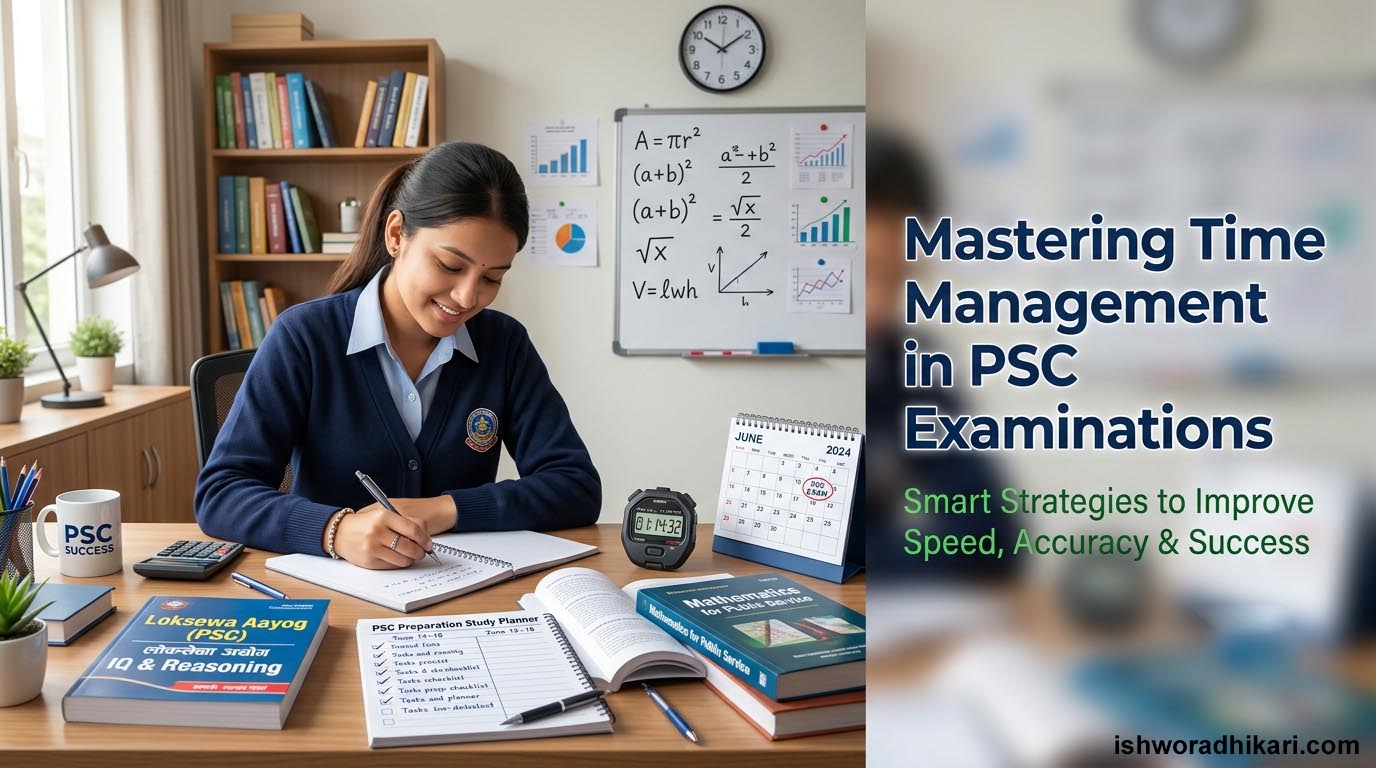
Public Service Commission (PSC) examinations are among the most competitive examinations in Nepal. Every year, thousands of aspirants compete for a limited number of government positions. While knowledge, dedication, and hard work are essential for success, one crucial factor often determines the final outcome: time management. Many candidates possess the required knowledge but fail to utilize their time effectively during preparation and in the examination hall. Therefore, mastering time management is one of the most important skills every PSC aspirant should develop.
Time management begins long before the examination day. A well-structured study plan allows students to cover the syllabus systematically without feeling overwhelmed. Instead of studying randomly, candidates should divide the syllabus into smaller sections and allocate specific time for each subject. Daily, weekly, and monthly goals help maintain consistency and ensure steady progress. When students follow a planned routine, they can identify weak areas early and dedicate additional time to improvement.
One common mistake among PSC aspirants is spending excessive time on favorite subjects while neglecting challenging topics. Effective preparation requires a balanced approach. Difficult subjects such as Mathematics, IQ, Reasoning, and General Knowledge should be practiced regularly. Allocating fixed time slots for each subject helps maintain balance and prevents last-minute panic. Remember, PSC examinations test overall competence, not expertise in a single area.
Mock tests and practice sets play a vital role in improving time management skills. Many candidates underestimate their importance and focus solely on theoretical study. However, solving questions under timed conditions helps students understand the actual examination environment. It develops speed, accuracy, and decision-making abilities. By regularly attempting mock examinations, candidates learn how much time they should spend on each section and how to avoid getting stuck on difficult questions.
During the examination itself, smart time allocation is critical. Candidates should first read all instructions carefully and quickly scan the question paper. It is advisable to answer easier questions first, securing marks efficiently and building confidence. Spending too much time on a single difficult question can negatively affect overall performance. If a question appears confusing, it is often better to skip it temporarily and return later if time permits.
Another important aspect of time management is minimizing careless mistakes. Rushing unnecessarily can lead to errors even in simple questions. Speed should always be balanced with accuracy. Candidates should keep a few minutes at the end of the examination for reviewing answers, checking calculations, and correcting mistakes. This final review often helps recover valuable marks.
Time management is not only about studying and examinations; it is also about maintaining physical and mental well-being. Adequate sleep, regular exercise, and short study breaks improve concentration and productivity. Students who study continuously without rest often experience burnout, reducing the effectiveness of their preparation. A healthy mind and body contribute significantly to efficient learning and better performance.
In today’s competitive environment, success in PSC examinations requires more than hard work—it demands smart work. Effective time management enables candidates to cover the syllabus comprehensively, practice sufficiently, and perform confidently under pressure. By planning wisely, practicing consistently, and maintaining discipline, aspirants can significantly increase their chances of success.
Ultimately, every candidate has the same 24 hours in a day. The difference between success and failure often lies in how those hours are utilized. Master your time, and you will be one step closer to mastering the PSC examination itself.
“Time is the most valuable resource in any competitive examination. Use it wisely, and success will follow.” – Ishwor Adhikari